


|
|
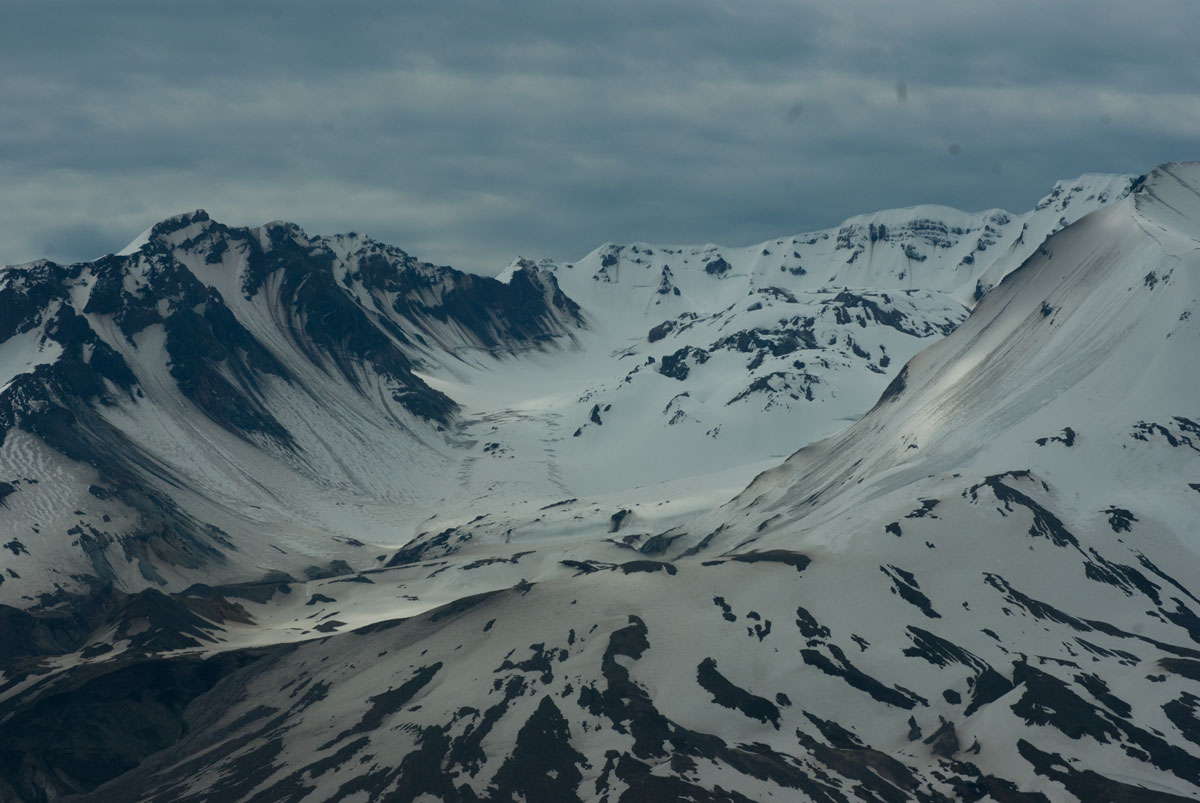
| A panoramic view of the North side of Mt. Helens as seen from Johnson's Ridge in August 2000. |
|
|
| Ten years later, in June 2011, I revisited Johnson's ridge and took some more photos, this time with a digital camera instead of the 35mm film camera I used in 2000. |
|
|
| August 2015 revisit to Johnson's Ridge. |
|
|
| June 2011 closer view |
|
|
| Closeup of lava dome June 2011 |
In March of 1980, Mt. St. Helens sprang to life after around 140 years of sleep. It started with a shallow earthquake directly under the mountain followed by the opening of steam vents and many more earthquakes. By the Middle of May there was a tremendous bulge on the north side of the mountain which was growing at the rate of 5 feet a day. Finally on May 18, 1980, a tremendous land slide occurred in which a major portion of the north flank of the mountain slide down the hill and into Spirit Lake. The water in the lake slopped to the east and up the hills there and rushed back across the land slide and started a mud flow that ran down the Toutle and into the Cowlitz crushing everything in its way and finally reached the Columbia River and clogged even the mighty Columbia within a day.
Meanwhile back at the mountain, the departure of all the weight on the side of the mountain allowed the steam from melted snow and ice which had been trapped inside the mountain to relieve itself. The blowout took 1300 feet off the top of the mountain and ash and pumice drifted in quality all the way to Montana, and in a matter of days was measured around the world.
For my companion page see "Mt St. Helens Erupts" which features a photo taken by this author of this web site which is published no where other than here.
In August of 2000, I visited Mt. St. Helens and what follows is my report.
Since the eruption extensive tourist/visitor facilities have been developed related to Mt. St. Helens which is now a National Monument. A major highway has been reconstructed to Johnston Ridge which is an excellent viewing point north of the mountain, a point named after a photographer casualty of the 1980 eruption. The highway departs Interstate 5 at Washington Exit 49 and extends east about 50 miles to its terminus. It is a modern highway with passing lanes on the hills. It does have a number of fairly long 6% grades for those who care. There are multiple visitor facilities along the way. The first is at Silverlake, just 5 miles off of Interstate 5. It features an exhibit center, as well as a wetlands walk on an elevated walkway over a portion of the lake that is filled with wetlands plants.
|
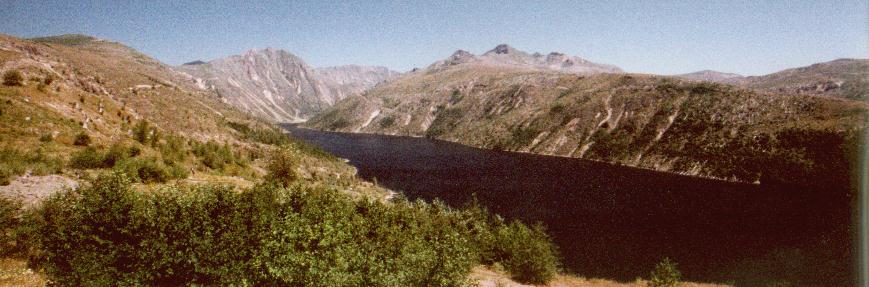
| Coldwater Lake and returning plant life--A panoramic view in August 2000 |

|
| Coldwater Lake and returning plant life--August 2015 |
|
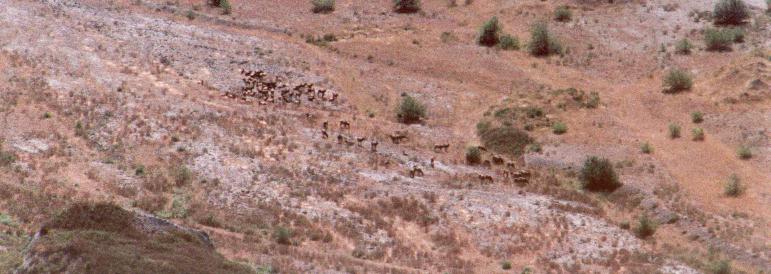
| A large herd of elk in the Toutle River Valley in August 2000. Photographed at a great distance with a 400 mm telephoto and cropped aggressively. |

|
| April 2016 from Jackson Highway north of Toledo. |
Other major visitor facilities include an outlook overlooking the Toutle River Valley, as well as a visitor facility at Coldwater Lake which does have a good view of the mountain, and the final destination at Johnson's Ridge. Within the blast zone the port of the property that was owned by Weyerhauser ( a major Washington State Timber Company) was salvage logged and replanted. The reforestation is doing nicely, with the trees 20 feet or so tall at this time. Douglas fir was planted at the lower elevations and Noble Fir was planted at the higher elevations.
On the Government land nothing was done to aid reforestation and the dominant plant are dandelions, although a variety of other species are appearing including alder trees in selected locations. To be sure various grasses, clover, loupen, fireweed and other plant life was observed. I also observed animal life ranging from squirrels to Elk.
Obviously, the area has a long ways to go before it fully recovers to the dense forest that it was before the eruption, but it is gradually returning to a forest already, and likely in another 50 years it will be grown up at least to hardwoods. The conifers will likely take longer because of a lack of a handy seed source, but the 'moonscape' appearance is clearly not for ever. The red alder is already started and widely scattered. Once the starts out there get large enough to produce a cone crop, I would expect that much of the area will sprout alder trees like oats. The mountain, itself is above timber line and overall the elevations are getting up there for trees so they won't do as well as they might in lower elevations, but alder will grow in pretty harsh climates, and likely the conifers will infill sooner than most expect. The Douglas fir which is native to the area has a pretty unique way of spreading. It produces a cone that 'freeze dries' open to drop its seeds. The seeds have wings on them, and it is thought they will blow for miles under the right conditions ( a frozen snow pack and a strong wind).
|
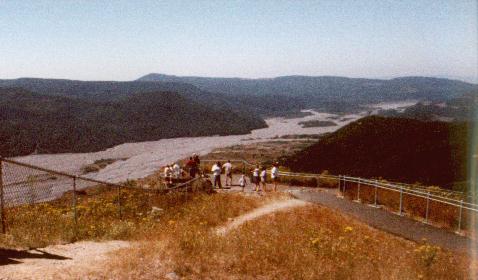
| The Toutle River Valley taken from the same vantage point as the elk photo except looking downstream. What you are seeing is the residual river of mud from the mudflow. The river today is no more than 20 feet wide. Aug. 2000. Sorry no expansion |
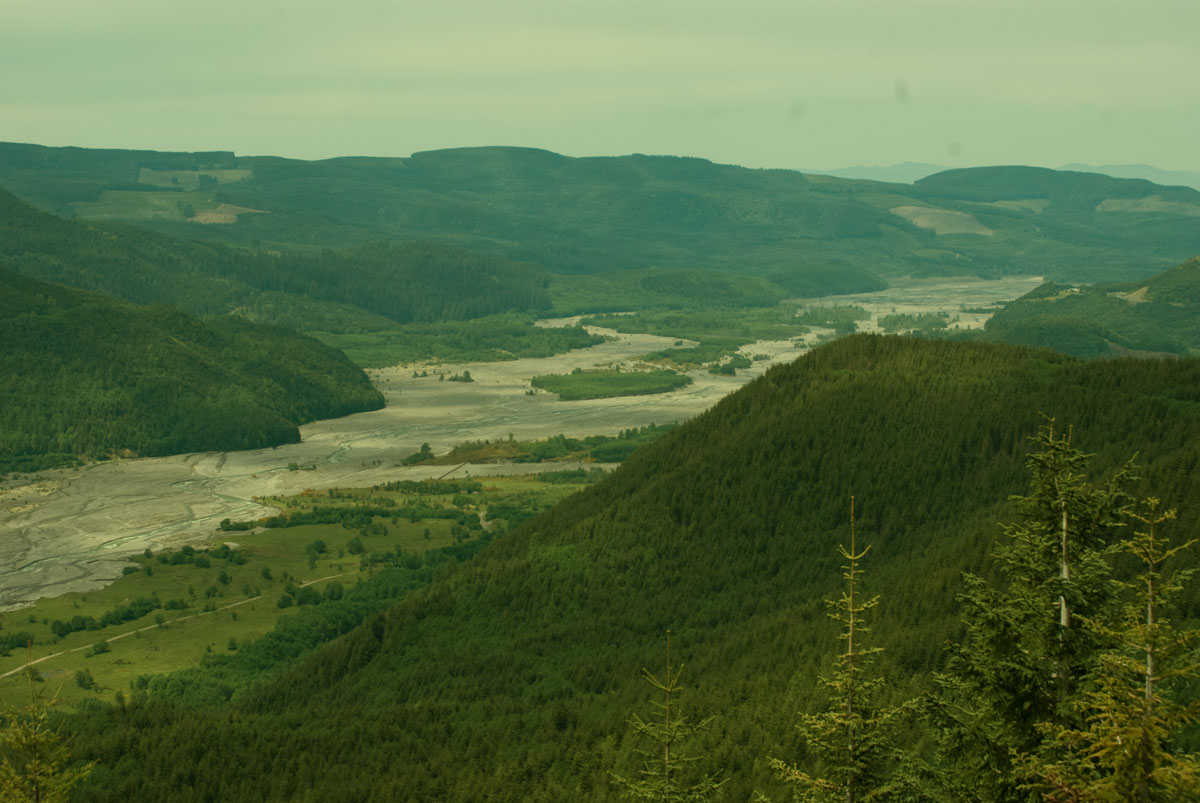
|
| Toutle River Valley in June 2011. This photo is taken from where the people are standing in the photo above. There is much to be said of the improved technical quality. Note that the trees are far more prominent. Click photo to expand. |
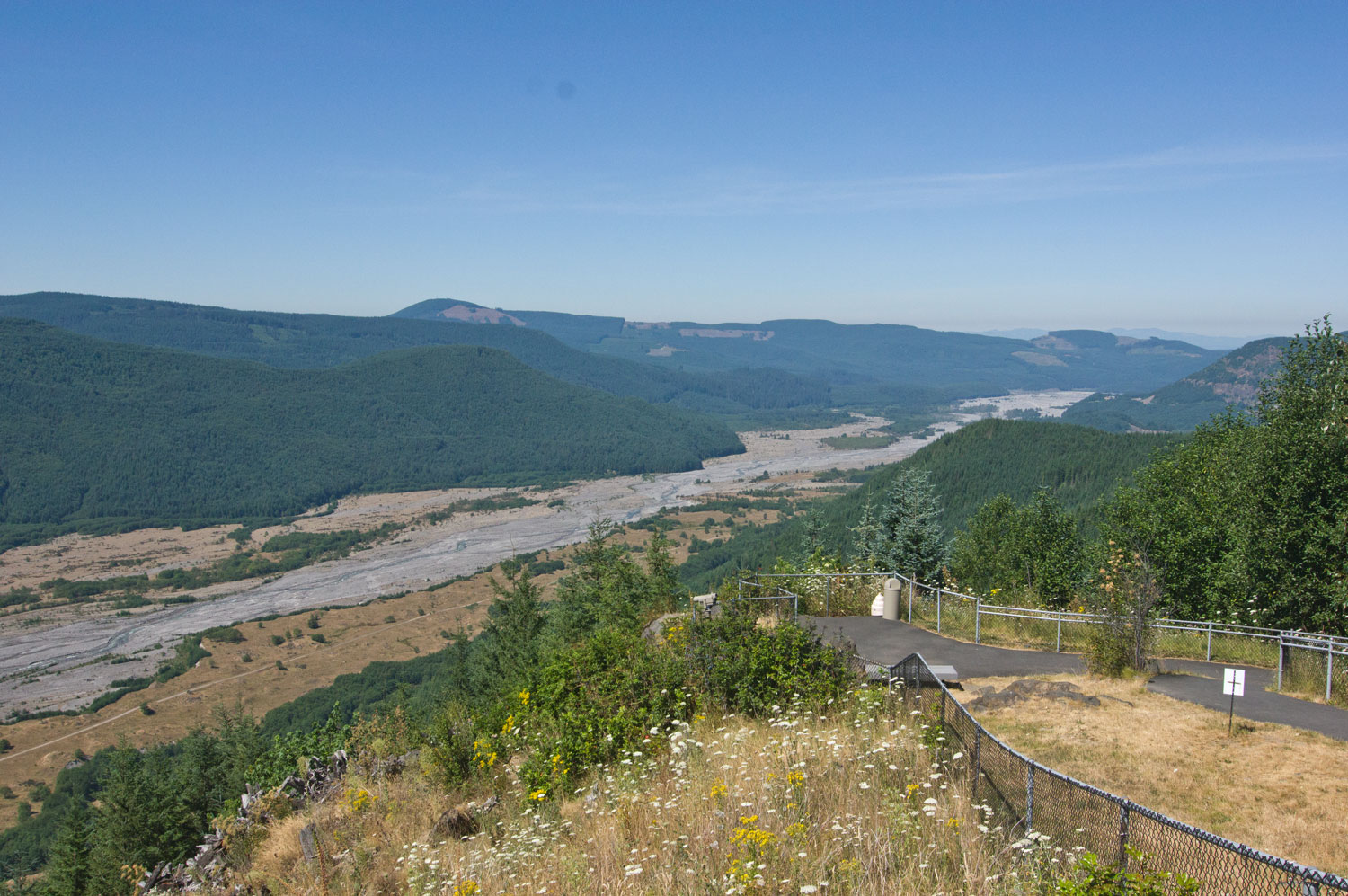
|
| Toutle River Valley in August 2015 Click photo to expand. |
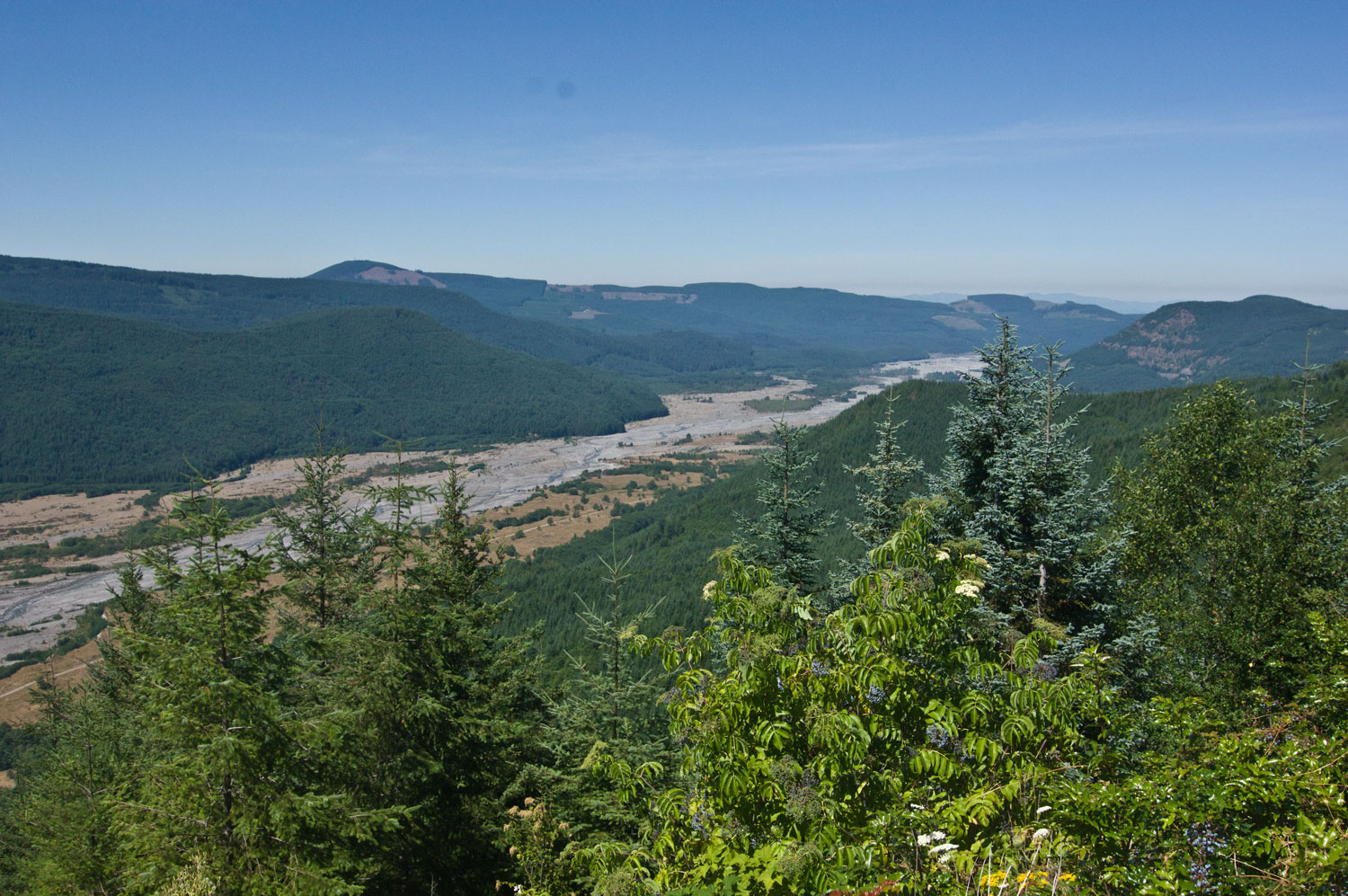
|
| Toutle River Valley in August 2015 (lower viewpoint) Click photo to expand. |
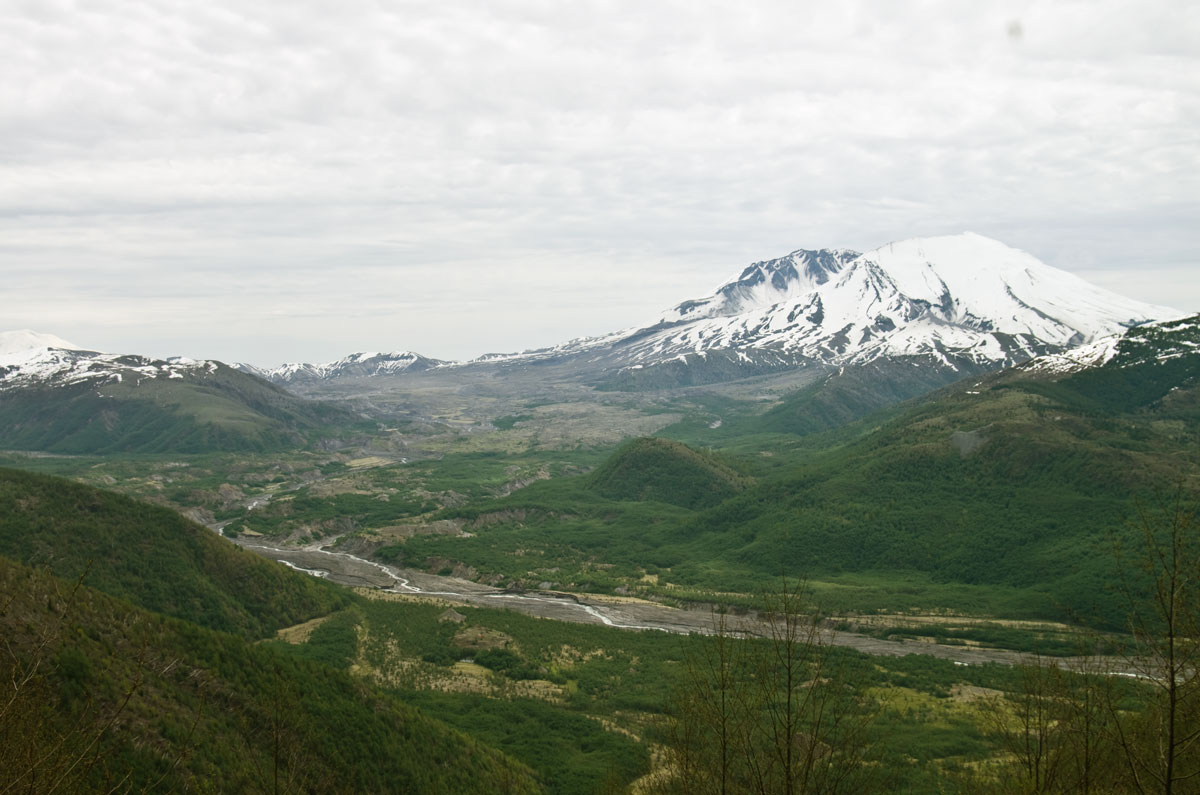
|
| Toutle River Valley in June 2011 looking toward the mountain. Note the green up. Click photo to expand. |
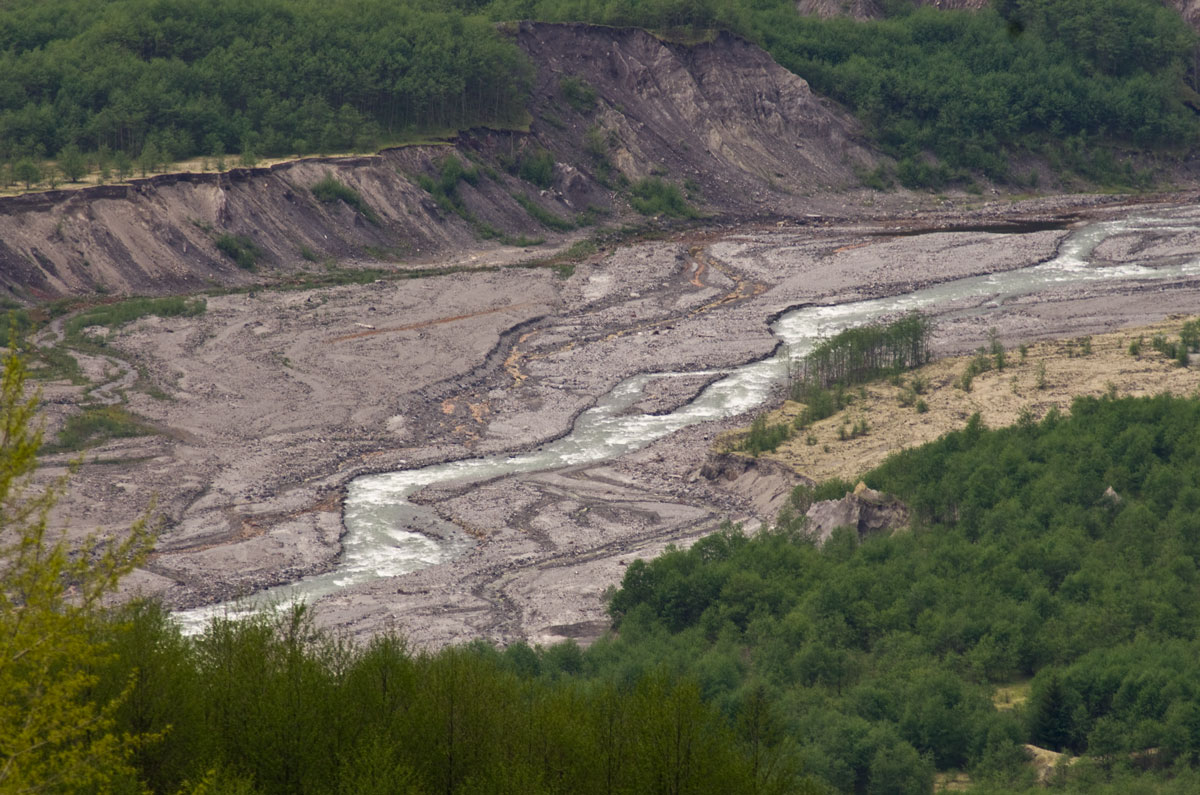
|
| Toutle River Valley in June 2011. Click photo to expand. |
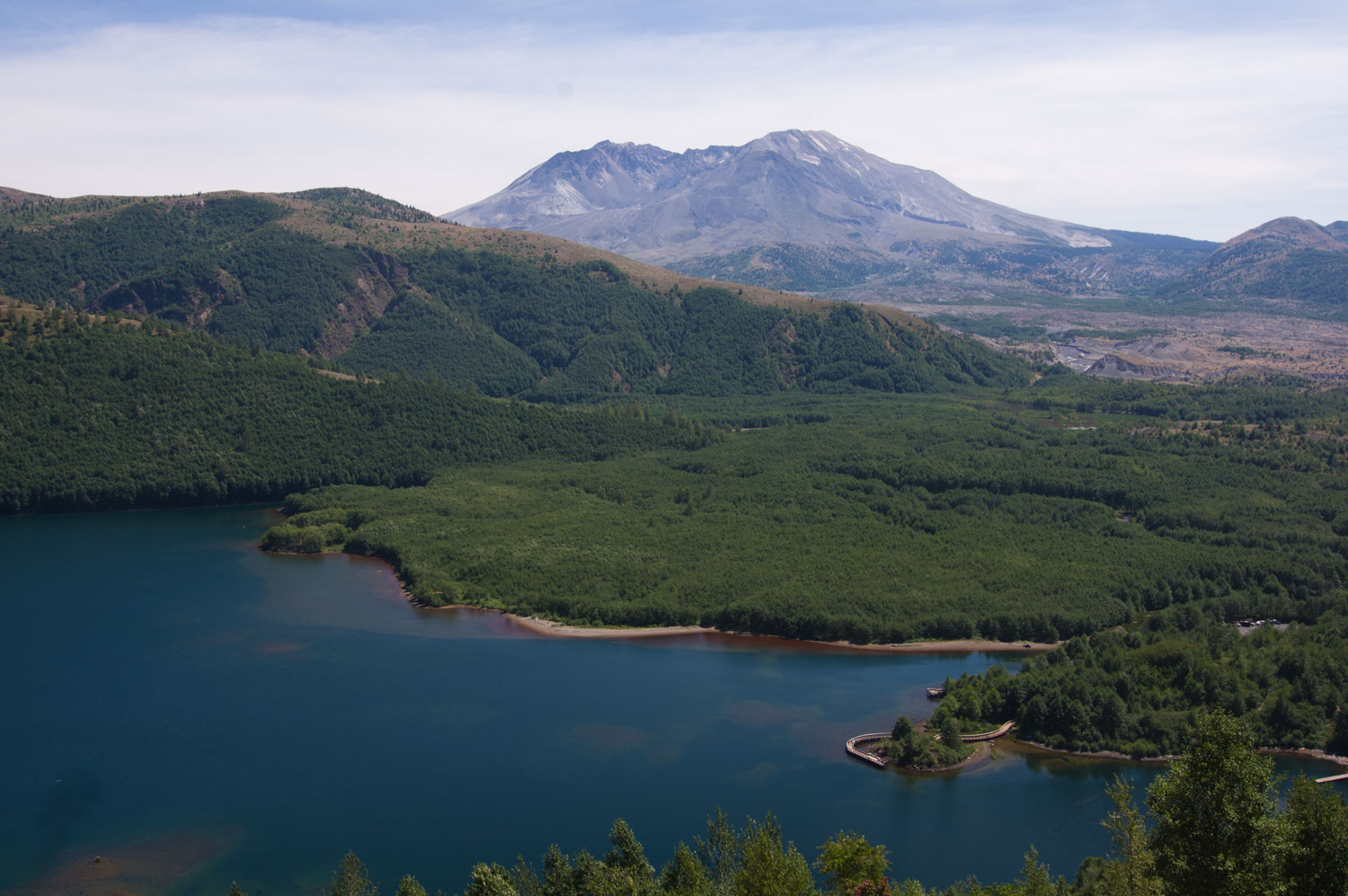
|
| Mountain view from Coldwater visitors center. Johnson's Ridge is prominant Ridge on center left. Click photo to expand. |
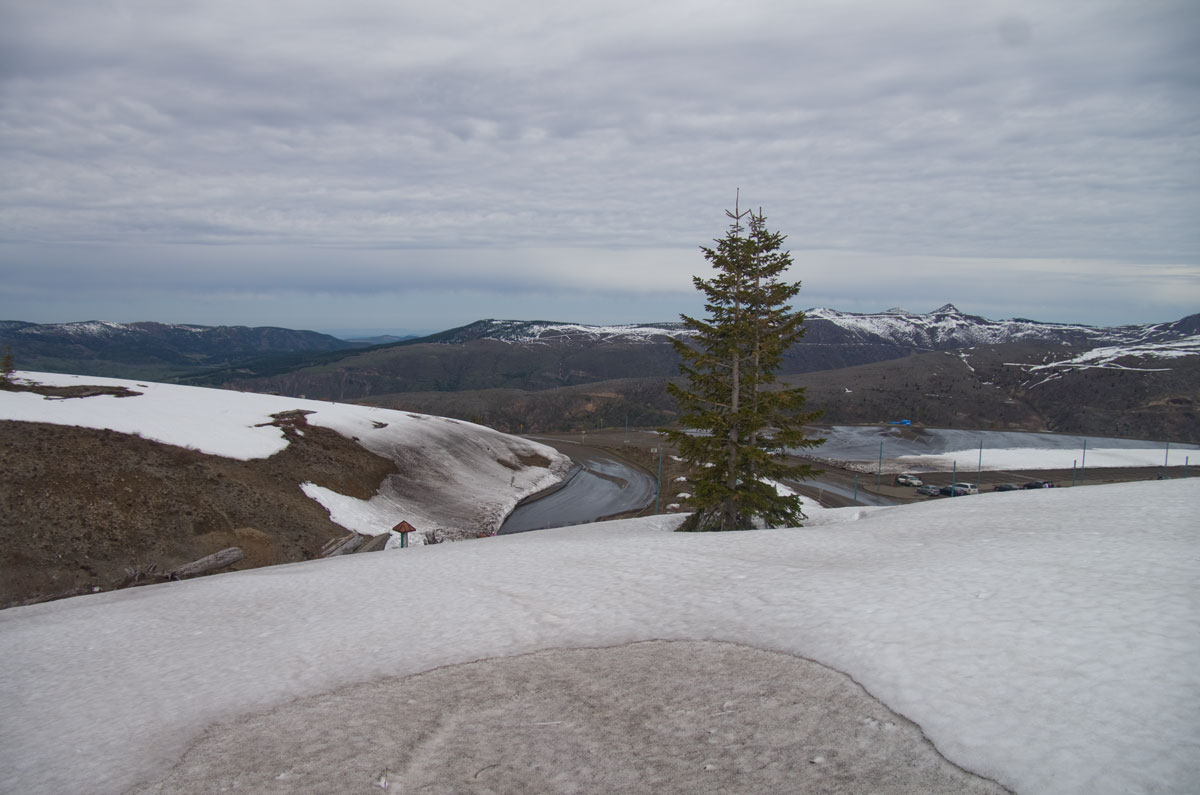
|
| Looking north over the Johnson's Ridge parking lot. Still pretty barren here in June 2011. Click photo to expand. |
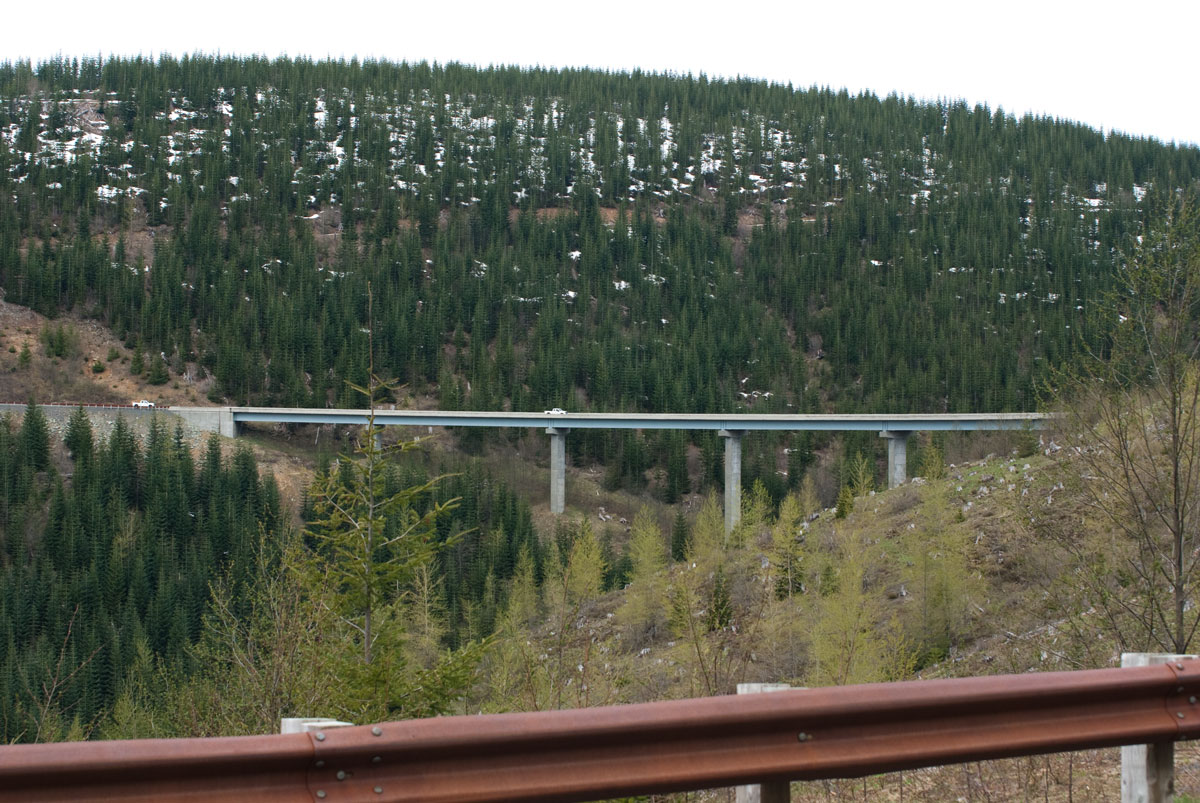
|
| A higher elevation Noble Fir planting in June 2011. Click photo to expand. |
Overall, if you are in the area in the summer, this site is a 'must see' and figure on it taking all day.
There is a lot of road to cover, and several places to stop and look. The visitor centers are extensive and have sort film strips as well as a collections of artifacts. You simply cannot take this in without making a day of it.
I retraced my steps of August 2000, and revisited what is now called the Mt. St. Helens, National Monument. This time I had a senior citizen's pass and got in free. For the most part the Weyerhauser land is well reforested and has half grown trees on it now, providing little clue of the violence that hit the area in 1980. Johnson's Ridge lookout is about 50 miles up SR 504 from Interstate 5 at Castle Rock. The federal land was not replanted and much of it is still barren. The Noble Fir that WEYCO planted in the upper elevations look a little out of place but are about 30 feet tall now. They are pretty skinny, and are going to need to fatten up some to be saw timber but they are getting their height. Some of the views along the road are diminishing due to timber growth. The first visitors center in the blast zone has been abandoned and has been taken over and operates as a forestry center. It over looks the Toutle River Valley and is on a bluff above what used to be Weyco's Camp Baker. I did not visit Coldwater Lake on this occasion.
The area near the mountain has greened up considerably however.
I returned to Mt. St. Helens August 1, 2015. Several photos are added to the groups on the right. The comparative photos of Coldwater lake are interesting. The alders in the foreground of the August 2000 and photo and those in the center of the 2011115 photo are the same trees. The notable difference is the reforestation of the far side of the lake and a vastly improved photographic qualitly.
In mid April, 2016, I went to the area to collect some more photos. The access roads had not yet opened for the season, however, I was able o find a good vantage point on the Jackson Highway north of Toledo, WA which presents a good view of the mountain. It's essentially a western view, so the crater is not readily visible as it exploded laterally to the north.